Content repurposing
Converting one piece of source content (podcast, video, blog) into multiple output formats across multiple platforms.
Last verified · 2026-10-23 · by Moe Ameen
Published 2026-04-24 · Updated
Short answer
Content repurposing is turning one source piece, like a podcast episode, a video or a blog post, into several formats for several platforms. Cross-posting tools such as Repurpose.io move the posts and videos you already have to more places. Kompozy also writes new pieces from the source, including text posts, carousels, blogs and newsletters. It pays off most when you publish in several formats at once.
Key takeaways
- Repurposing means one source piece feeds several formats and platforms.
- Cross-posting moves an existing asset; repurposing also creates new pieces from it.
- The more formats you publish in, the more one source is worth.
- If you only work in one format, a single-purpose tool like OpusClip or Jasper may fit better.
What is content repurposing?
Content repurposing is turning one source piece, like a podcast episode, a video or a blog post, into several formats for several platforms. You make the thing once and it shows up everywhere your audience reads or watches. Some tools, like Repurpose.io, automate sending posts and videos you already have to more platforms. Kompozy also writes new pieces from the source (text posts, carousels, blogs, newsletters) on top of moving the original.
Repurposing pays off most when you publish in several formats at once. If you only work in one format, a single-purpose tool may suit you better: OpusClip if all you do is clip video, Jasper if all you need is marketing copy.
What does this look like in Kompozy?
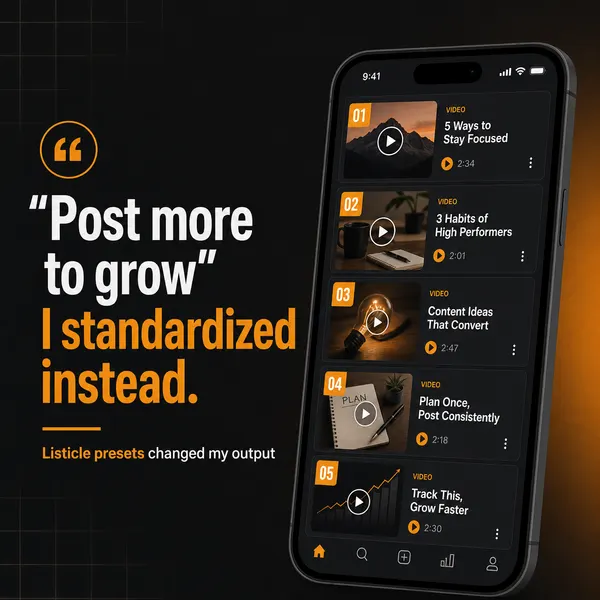
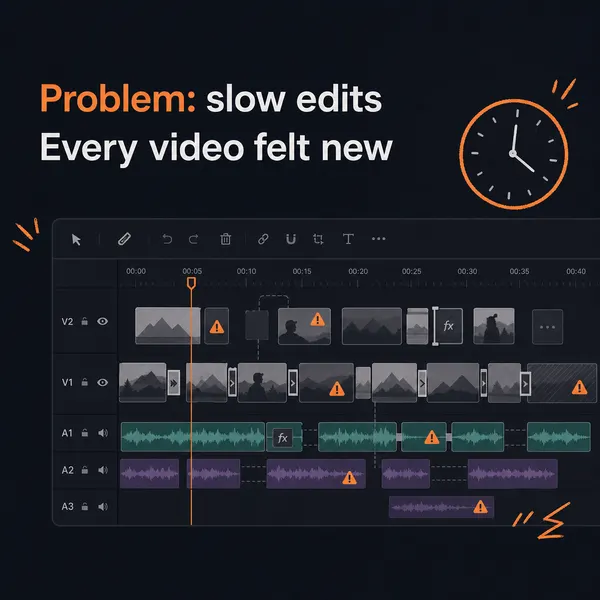
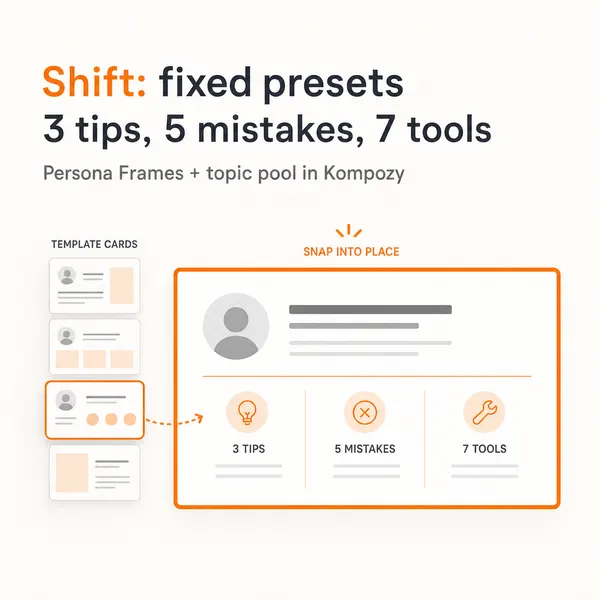
A real five-slide carousel from the Kompozy workspace. It shows one of the formats Kompozy writes from a source on top of the video itself.


Who is this for, and who should skip it?
Best for:
- Creators and teams who publish in several formats, like video, carousels, posts and newsletters
- Anyone sitting on long recordings or articles that only ever ran once
Not ideal for:
- Creators who only publish one format, where a specialist tool such as OpusClip or Jasper may be simpler
- Teams that just want the same file posted to more platforms, which a cross-posting tool like Repurpose.io handles
Frequently asked questions
What is content repurposing?
Content repurposing is the practice of converting one piece of source content — a podcast, video, or blog — into multiple output formats across multiple platforms. You record or write once, and that one piece feeds every platform you publish on.
How is repurposing different from cross-posting?
Cross-posting sends the same existing asset to more destinations, which is what a tool like Repurpose.io automates. Repurposing goes further by generating new variants — text posts, carousels, blogs, newsletters — in addition to moving existing ones.
Who benefits most from content repurposing?
Creators and operators who publish in several formats get the most out of it, because one source feeds all of them at once. If you work in a single format, a specialist tool such as OpusClip for clipping or Jasper for writing may be the better fit.
How does Kompozy approach repurposing?
Kompozy generates new variants from a source, not just relocates existing assets. One source produces text posts, carousels, blogs, and newsletters alongside the moved video, all anchored to the same workspace.
How many outputs should one source produce?
There is no fixed number. One source should feed every format and platform your audience actually uses, so the more formats you publish in, the more one source is worth.
How do we know this?
We checked every figure and product claim on this page against the sources listed below on 2026-10-23, and removed or rewrote anything we could not confirm. Kompozy output types come from kompozy.io. Competitor descriptions were read off each vendor's own homepage.
Sources
- Kompozy — Turn one idea into a month of content (read 2026-10-23)
- Repurpose.io — Automated content repurposing & distribution platform (read 2026-10-23)
- OpusClip — AI video clipping and editing tool (read 2026-10-23)
- Jasper — AI agents for marketing (read 2026-10-23)
Related terms
- Output buckets — The five user-facing content categories every Kompozy generation maps to: Video, Image, Text, Blog, Newsletter.
- Long-form video — Video longer than ~3 minutes, typically published on YouTube, podcasts, or as webinars — optimized for watch time and depth, not feed discovery.
- Evergreen content — Content that stays relevant and continues to generate views, traffic, or leads months or years after publishing — the opposite of news.
- Vertical video — Video shot or cropped at 9:16 aspect ratio, optimized for phone-held viewing on Reels, Shorts, TikTok, and Stories.
- AI Content Repurposing — The complete methodology for turning one source into 25-35 pieces of native-format content across every platform — without producing AI slop.
- Autonomous Content Creation — Most "autonomous" AI content is slop.
- AI Brand Voice & Persona — Without a Persona Brief, every AI output averages to the LLM default voice.