Content distribution strategy in 2026: the owned, earned, and paid framework, a social-first process, and how to distribute everywhere at once
Most teams still spend the bulk of their effort making content and almost none getting it seen — which is exactly backwards now that the feed, not the homepage, is where discovery happens. A content distribution strategy is the plan for getting a piece in front of the right audience across a deliberate mix of channels you own, channels others amplify for you, and channels you pay to reach. This guide lays out the owned/earned/paid model honestly, walks the seven-step social-first process from goal to measurement, and makes the case that in a landscape fragmented across dozens of platforms — each with its own algorithm, format, and audience behavior — distributing one idea deeply across a few channels beats posting the same thing shallowly to ten. It ends on the real bottleneck: distribution at this breadth is a content-supply problem, not a scheduling one, and the teams that win are the ones that can produce enough channel-native variants to actually fill the waves.
Published 2026-09-08 · Updated
Short answer
A content distribution strategy is a plan for getting each piece in front of the right audience through owned channels you control, earned channels where others amplify you, and paid channels you buy. Build it social-first: reshape one idea natively for each platform. Set a goal, find your audience, give each channel a role, audit what you have, build a repurposing workflow, release in waves and measure each channel separately.
Key takeaways
- Owned channels compound, earned channels lend credibility, and paid channels buy targeted reach. Most brands need all three.
- Social-first means the native social version of an idea is the main artifact, not a link dump.
- The seven steps: goal, audience, channel roles, audit, repurposing workflow, waves, per-channel measurement.
- Going deep on a few channels beats posting the same thing thinly to ten.
- The hard part is supply: producing enough native versions to fill every wave.
What problem does a content distribution strategy solve?
Most content teams spend the overwhelming majority of their effort on production — researching, writing, filming, editing — and almost nothing on getting the finished piece seen. That split made sense when your website was the destination and search was the road to it. It makes no sense now. Discovery has moved into the feed, the answer engine, and the recommendation algorithm, and a piece of content that is not actively distributed into those surfaces is, for practical purposes, invisible no matter how good it is. A content distribution strategy is the correction to that imbalance: a deliberate plan for where a piece goes, in what form, and when, so that the effort you already spent making it is not wasted on a channel nobody is watching.
The definition is simple and worth stating plainly: a content distribution strategy is a plan for getting your content in front of the right audience, using a mix of owned, earned, and paid channels. Everything else on this page is the how. The hard part is not the definition — it is that the channel landscape has fragmented into dozens of surfaces, each with its own algorithm, its own native format, and its own audience behavior, so "distribute it" is no longer one action but a coordinated set of them. This guide walks the model, the process, and the one constraint that quietly decides whether any of it is achievable.
What are the three types of distribution channel?
Every distribution channel falls into one of three buckets, sorted by how much control you have over it. The model is old but it has never mattered more, because the three types do genuinely different jobs and most strategies fail by leaning on one and neglecting the others.
Owned: the foundation you control
Owned channels are the ones you set the terms on — your website, your blog, your email list, and your organic social profiles. They are the foundation of any distribution strategy because nobody can throttle, deplatform, or charge you for access to your own audience the way an ad auction or an algorithm can. Owned media is where compounding happens: a blog post keeps earning search traffic for years, an email list grows into an asset you can reach on demand, and an organic social following is a distribution channel you built rather than rented. The catch is that owned reach is capped by the audience you have already accumulated, which is why it cannot be the whole strategy — it distributes brilliantly to people who already know you and poorly to people who do not.
Earned: the credibility you cannot buy
Earned channels are the places where other people amplify your content — shares, reposts, press coverage, backlinks, and user-generated content. You cannot purchase earned media and you cannot fully control it, and that is exactly why it is the most credible of the three: a recommendation from someone who is not you carries weight that your own claims never will. This is where the social-first shift bites hardest. Creator content is widely seen as more authentic than a brand's own posts precisely because it does not come from the brand, so a share from the right person or a mention in the right community often out-distributes anything you could post from your own account. Earned media is hardest to manufacture, which is why brands that are new or breaking into a new vertical lean on it most — it is how you borrow credibility you have not yet built.
Paid: the reach you buy to move faster
Paid channels are placements you pay for — social and search ads, sponsored content, and increasingly ads inside AI assistants. Paid distribution does one thing the other two cannot: it puts your best content in front of a precisely chosen audience, at whatever scale your budget allows, on a timeline you set. That makes it the right lever for anything time-bound — a product launch, a webinar, a seasonal push — where you cannot wait for owned reach to compound or for earned amplification to happen on its own. The discipline with paid is to spend it on content that has already proven it resonates organically, rather than using ad budget to force reach for a piece the audience is ignoring. Most brands benefit from all three channel types working together; the right balance is set by the goal and the budget, not by a formula.
Why should a distribution strategy be social-first?
The reason 2026 distribution strategies are built "social-first" is that social is now where discovery starts for most people, not where it ends. For many audiences the platforms have become the top of the funnel rather than a place to recycle links after the real work shipped. A social-first strategy takes that seriously: instead of treating social as a dumping ground for blog URLs, it makes the social-native version of an idea the primary artifact and lets the long-form piece support it.
The practical consequence is that you stop thinking in "one piece of content" and start thinking in "one idea, many native forms." A single webinar is not one asset to link to — it is a set of vertical clips for TikTok and Reels, a carousel for Instagram and LinkedIn, a thread for X, a highlight for your email, and the full recording on YouTube and your site. Each of those is shaped for how people actually consume on that surface. That is the opposite of cross-posting one identical file everywhere, and the difference is not cosmetic: the algorithms increasingly suppress content that is obviously recycled from another platform, so native adaptation is both a reach tactic and a distribution requirement. The full logic of when to mirror versus adapt versus rebuild is its own subject, covered in the guide on cross-posting on social media.
What are the seven steps of a content distribution strategy?
A distribution strategy is a sequence, and running the steps out of order is how teams end up with a channel list chosen by convenience instead of evidence. Here is the process that holds up.
1. Start with a goal
Every distribution decision flows from what you are trying to achieve: drive traffic, build authority, generate leads, or support a specific launch. The goal determines which channels matter and which metrics count, so naming it first prevents the most common failure — distributing everywhere, measuring nothing in particular, and being unable to say whether it worked.
2. Find where your audience actually is
Use your own analytics and social listening to learn where your buyers already spend their attention, and let that evidence — not habit or internal preference — set the channel list. The fragmented landscape makes this non-negotiable: there are too many channels to cover them all, so you cover the few where your specific audience is active and ignore the rest without guilt.
3. Assign each channel a role
Channels are not interchangeable. Give each one a job in the journey: some are for discovery (getting in front of people who do not know you), some for consideration (deepening interest), some for retention (staying present with people who already bought). Owned channels tend to carry long-term SEO and retention, earned media carries credibility and discovery, paid carries targeted acceleration. Assigning roles stops you from measuring a discovery channel by conversion metrics it was never meant to drive.
4. Audit what you already have
Before making anything new, inventory your existing content and flag the assets with the most distribution potential — the evergreen pieces, the proven performers, the things that can be reshaped into ten native formats. Most teams are sitting on a back catalog they have distributed to exactly one channel once. The audit turns that dormant inventory into distribution fuel.
5. Build a repurposing workflow
Standardize how one core asset becomes its channel-native versions, so adaptation is a repeatable process rather than a heroic effort each time. This is the step that decides whether the social-first model is actually sustainable, because reshaping one idea into a dozen native formats by hand, every week, is precisely the work that does not scale without a system. Scaling social media content goes deep on building that system.
6. Distribute in waves
Do not fire everything at once. Stagger the release across time and channels — publish the core piece, then a LinkedIn post the next day, then video clips the following week, then an email highlight, then a paid push behind whatever performed best. Wave distribution extends the life of a single idea from one day to weeks and lets each channel feed the next, so the content keeps surfacing to different slices of your audience instead of peaking and dying in an afternoon. A social media calendar is the instrument that keeps the waves organized.
7. Measure per channel, then iterate
Track the metrics that align with the goal from step one, and track them per channel rather than as one blended total. Distribution fails unevenly — one channel is quietly carrying the whole result while another is pure effort with nothing to show — and only per-channel measurement reveals which is which. Feed what you learn back into channel selection, role assignment, and the next wave. The strategy is a loop, not a launch.
Is depth or breadth better in content distribution?
Distributing one piece of content deeply across three channels consistently outperforms spreading it shallowly across ten. The instinct, once you accept that discovery is fragmented, is to try to be everywhere. That instinct is wrong, because presence without depth is noise — a half-hearted post on a channel you do not understand, in a format the audience does not want, drives nothing and costs attention you could have spent going deep where your audience actually is. The evidence from step two exists precisely to give you permission to ignore channels. Pick the few that your audience uses, distribute into them natively and repeatedly, and let the channels you skipped be skipped on purpose.
Where does a distribution strategy break?
Every part of this plan — the native adaptation, the wave distribution, the depth across multiple channels, the steady cadence that earned and owned reach both require — collapses onto one constraint that the framework never names. To distribute one idea natively across six surfaces, in waves, every week, you have to produce six-plus native versions of that idea, every week, on brand, without the quality dropping. That is not a scheduling problem or a strategy problem. It is a supply problem, and it is where most distribution strategies quietly die: the plan is sound, the channels are chosen, the calendar is built, and then the team can only actually make two of the six formats before the week runs out, so the waves thin to a trickle and the "multi-channel strategy" becomes a blog post and one repost.
This is why a distribution strategy that looks like a marketing document is really an operations question in disguise. The teams that execute the social-first model at depth are not the ones with the best framework — everyone has the same framework, it is on this page — they are the ones who can manufacture enough channel-native, on-brand content to actually fill the waves across every channel they chose. Breadth of distribution is bounded by breadth of production. If you cannot produce the variants, the strategy is a wish. For the automation layer that keeps the cadence running without a person babysitting every post, see social media automation in 2026.
How does Kompozy fit a distribution strategy?
Kompozy does not choose your channels, write your goals, or earn your press mentions — the strategy on this page is yours to set, and earned media is by definition something you cannot manufacture. What Kompozy removes is the exact constraint the previous section named: the rate at which you can produce enough channel-native, on-brand content to fill the distribution plan you designed. It is an AI content generation and multi-platform publishing engine, and in a social-first model where breadth of distribution is capped by breadth of supply, that production rate is the whole game.
Concretely, it turns the repurposing workflow from step five into a single action. Point it at one source — a video, a post, a page, an idea — and it generates the native variants each channel needs rather than one asset you then reshape by hand: vertical Persona Shorts and Clipped Shorts for TikTok, Reels, and Shorts; Carousel Posts for Instagram and LinkedIn; Photo Posts, Quote Graphics, and Infographic Photos for the feed; Text Posts and threads; long-form Blog Articles; and Email Newsletters for the owned channel the framework keeps reminding you not to neglect. That is the whole spread of formats from one input, which is precisely the multiplication the "one idea, many native forms" rule demands. Every format is governed by one Persona Brief and a face-locked persona pool, so a dozen native versions stay recognizably the same brand instead of drifting into a dozen slightly different voices — the thing that usually breaks when you scale production.
Then it executes the waves. The same engine fans that output across eight social platforms plus blog and email from one scheduling queue, with Autopilot and a per-post review gate deciding timing and staggering releases so the wave distribution from step six runs as a standing program rather than a manual push you have to personally drive every week. The strategic decisions stay with you — which channels, which goal, which message — and the production-and-publishing grind that normally caps how much of the strategy you can actually execute is handled by the engine. That is the practical difference between a distribution strategy you can write and one you can sustain: the plan is free, but only a supply engine makes depth across every channel affordable in hours per week instead of a full content team's.
What is the bottom line on content distribution strategy?
A content distribution strategy is no longer optional polish on top of content production — it is the half of the job that actually determines whether anyone sees what you made. The model is durable: distribute through owned channels you control, earned channels that lend credibility, and paid channels that buy targeted reach, with the balance set by your goal. The process is a sequence: goal, audience, channel roles, audit, repurposing workflow, staggered waves, per-channel measurement. The 2026 refinement is to go social-first and deep rather than everywhere and shallow. And the constraint nobody writes on the strategy slide is supply — the plan only works if you can produce enough channel-native, on-brand content to fill it. Get the framework right, then solve the supply problem, because the second one is what decides whether the first ever ships.
What does this look like in Kompozy?
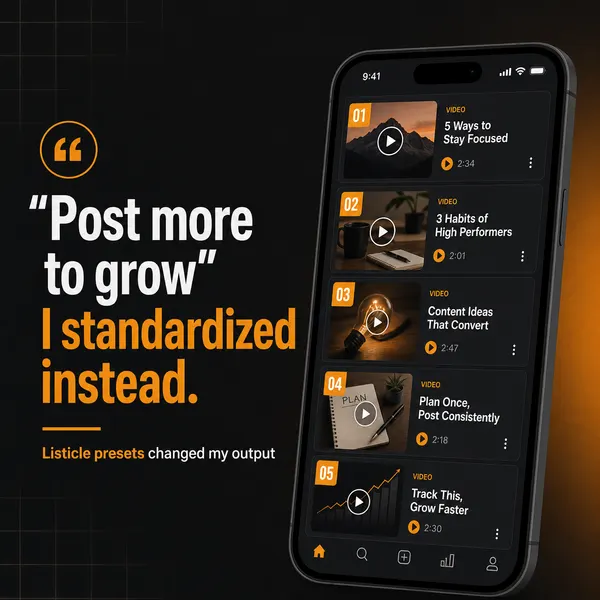
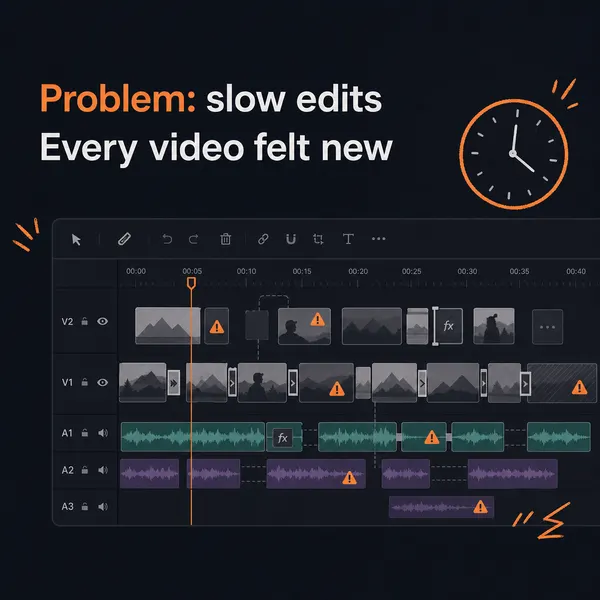
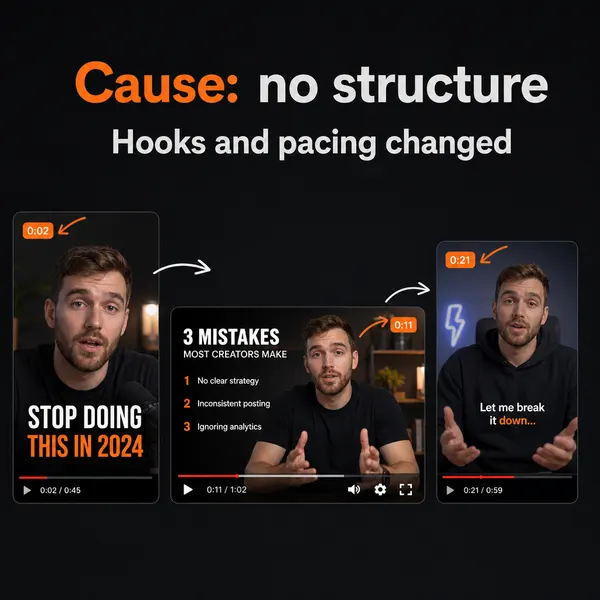
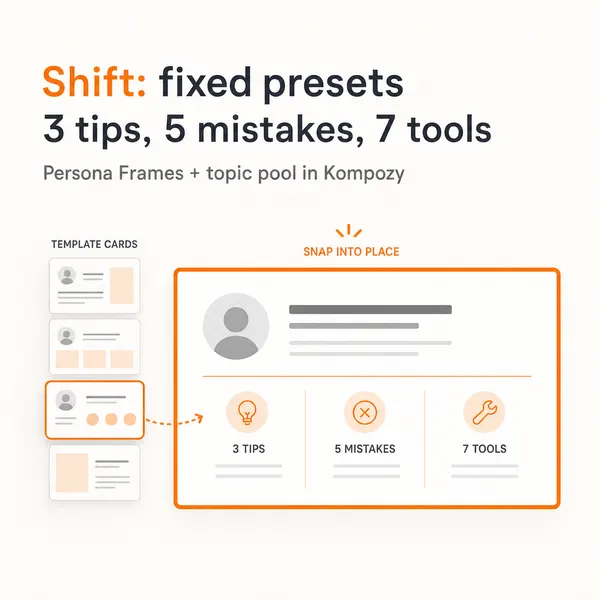
A real five-slide carousel from the Kompozy workspace, one of the native formats a single idea can become in a distribution wave. It was not made for this guide or for any customer.
Who is this for, and who should skip it?
Best for:
- Teams that spend most of their effort making content and very little getting it seen.
- Brands with a back catalog of evergreen pieces that have only been posted once.
- Marketers planning a launch who need owned, earned and paid channels working in sequence.
Not ideal for:
- Anyone trying to be on every platform at once without the capacity to post natively on each.
- Teams hoping a tool will earn press or shares. Earned media can't be manufactured.
- Brands that measure success only by one blended total across channels.
Frequently asked questions
What is a content distribution strategy?
It is a plan for getting your content in front of the right audience using a deliberate mix of owned, earned, and paid channels, rather than publishing and hoping. Owned channels are the ones you control (your site, blog, email list, and organic social). Earned channels are where other people amplify you (shares, press, backlinks, and user-generated content). Paid channels are placements you buy (social and search ads, sponsored content). A strategy decides which channels matter for your audience, what role each plays, and how a piece moves across them over time.
What is the difference between owned, earned, and paid media?
Owned media is distribution you control outright — your website, blog, email list, and your own social profiles — and it is the foundation because you set the terms. Earned media is amplification you cannot buy or control: someone shares your post, a journalist links to you, a customer posts about you; it carries the most credibility precisely because it is not yours. Paid media is reach you purchase, like ads or sponsored placements, and its job is to put your best content in front of a specific audience at whatever scale you can afford. Most brands need all three, with the balance set by their goals and budget.
What does "social-first" distribution mean?
Social-first means you treat social platforms as the primary place discovery happens and build the distribution plan around their native formats instead of treating social as an afterthought channel where you dump links. In practice it means a single idea is reshaped for each platform — a webinar becomes vertical clips, a carousel, an X thread, an email highlight — so it fits how people actually consume on that surface, rather than cross-posting one identical asset everywhere. It reflects how much brand discovery now starts in the feed rather than on a homepage.
Should I cross-post the same content everywhere or adapt it?
Adapt it. Posting one identical asset to every platform is the single most common distribution mistake, because each channel has its own format, aspect ratio, caption style, and audience expectation, and the algorithms increasingly suppress content that is obviously recycled from elsewhere. The efficient middle path is to distribute one core idea but reshape it natively for each destination. That is a different discipline from true repurposing, and the distinction — when to mirror, when to adapt, when to rebuild — is worth getting right.
How do I measure whether my content distribution is working?
Measure against the goal you set in step one, not against vanity totals. If the goal was traffic, track sessions and assisted conversions by channel; if it was authority, track branded search, shares, and inbound mentions; if it was launch support, track pipeline influenced. The key move is per-channel measurement — distribution fails unevenly, and a blended number hides the channel that is carrying you and the one that is wasting effort. Then feed what you learn back into channel selection and the next wave.
How do we know this?
This guide is a planning framework and reports no measured results. On 2026-10-23 we removed two unsourced claims about how many consumers discover brands on social, plus a format count we could not confirm on kompozy.io. We checked the remaining Kompozy product claims against kompozy.io and kompozy.io/pricing.
Sources
- Kompozy — Home (formats and platforms) (read 2026-10-23)
- Kompozy — Pricing (read 2026-10-23)
Get started → · ← All guides · Compare Kompozy vs other tools