How to build a brand newsroom: structuring a content engine for consistent publishing and storytelling (2026)
A brand newsroom is the idea that a company should publish like a media outlet — a central, cross-functional team that runs on an editorial calendar, works to a daily or weekly rhythm, and ships timely, on-brand content at the cadence of a real newsroom instead of the stop-start pace of campaigns. The concept is not new; it goes back to the era when brands realized they no longer needed a journalist to reach their audience and could report directly. What has changed is why it matters now: audiences expect a steady, credible stream of content across many platforms, search and answer engines reward publishers who are consistently present, and the campaign model — big push, long silence — leaves too many gaps in between. This guide is the practical build, not the manifesto. It works through what a brand newsroom actually is and what it is not, the honest reasons to build one and the reasons not to, the roles that staff it (editor-in-chief, managing editors, a beat system that assigns reporters to parts of the business, and the makers who turn a story into finished content), the operating rhythm that keeps it moving — standups, an editorial calendar, an approval lane fast enough for timely content — the content mix from breaking updates to evergreen features, the discipline of real-time content and the newsjacking trap that has burned brands who chased a moment badly, and the metrics that tell you it is working. It is honest about the catch that sinks most brand newsrooms: the model was designed by and for organizations that could staff a genuine editorial team, and the reason most attempts collapse is not a bad idea but an output rate a small team cannot sustain by hand. The last section is about closing exactly that gap — keeping the editorial judgment human while making the production and multi-platform publishing something a lean team can actually hit at newsroom cadence.
Published 2026-07-29 · Updated
Short answer
A brand newsroom is a cross-functional team of editors, writers, designers, and social and PR people that publishes timely, on-brand content on an editorial calendar, daily or weekly, the way a media outlet does. To build one, appoint an editor-in-chief, assign beats, hold regular standups, agree a fast approval lane, mix evergreen and reactive pieces, and track share of voice. Most brand newsrooms stall because a small team cannot keep up the output.
Key takeaways
- A brand newsroom is an operating model: an editorial owner, beats, and continuous publishing.
- A content calendar schedules planned work. A newsroom also reacts the same day a story breaks.
- The approval lane decides whether timely content is possible. Leadership has to trust the editor to approve alone.
- Measure share of voice, engagement depth and whether you actually hit your cadence, not just clicks.
- Keep editorial judgment human and systematize production so a lean team can hold the rhythm.
What is a brand newsroom, in one paragraph?
A brand newsroom is a company publishing like a media outlet. Concretely, it is a central, cross-functional team — editors, writers, designers, social and PR people working to one editorial plan rather than in separate marketing silos — that produces and ships timely, on-brand content on an editorial calendar and to a daily or weekly rhythm. The defining shift is that the brand reports directly to its own audience instead of waiting on external journalists to cover it or on quarterly campaigns to say something. It fills the gaps industry reporting leaves, controls the arc of its own narrative, builds a standing capability to respond in a crisis, and reads its audience in near-real time through the act of publishing constantly.
The idea is older than most think — it traces to the moment brands realized they no longer needed a middleman to reach an audience and could become publishers themselves. What makes it a 2026 problem rather than a 2013 slogan is the environment it now has to run in: audiences expect a steady, credible stream across many platforms, answer engines and search reward publishers who are consistently present and specific, and the old campaign rhythm of one big push followed by a long silence leaves too much dead air in between. This guide is the build, not the manifesto — the roles, the operating rhythm, the content mix, the discipline around real-time content, the metrics, and the honest reason most attempts stall.
What is a brand newsroom, and what is it not?
From a real newsroom the model takes three things: an editorial function (someone owns what gets covered and to what standard), a beat structure (people are responsible for specific territory, not just whatever lands in the queue), and a cadence (publishing is continuous, not episodic). What it does not import is the idea that everything must be hard news. A brand newsroom covers its own world — its industry, its customers, its category, the cultural moments adjacent to it — with a mix of reactive and planned content, and the "news" is often a feature, a data point, an explainer, or a timely take rather than a breaking story.
It is also not a synonym for a content calendar, and conflating the two is the most common way the concept gets watered down. A calendar schedules planned content; a newsroom is built to react to what a calendar cannot predict. The calendar is a tool inside the newsroom — the planned, evergreen base layer — but the newsroom adds the machinery to publish something timely the same day a story breaks: the standups that surface it, the approval lane short enough to ship it while it still matters, and the editorial judgment to decide it is worth covering at all. A team that only executes a pre-planned calendar has a content operation, which is valuable, but it is not yet running a newsroom. The distinction is covered from the planning side in the social media calendar guide; the newsroom is what sits on top of it.
Why build a brand newsroom, and when should you skip it?
The honest case for a brand newsroom rests on a few durable advantages. The first is narrative control: when you publish at frequency, you set the arc of how your brand and category are understood rather than reacting to how others frame you. The second is gap-filling — most industries are under-covered by trade press, and a brand that reports its own beat well becomes the source people and, increasingly, answer engines turn to. The third is crisis readiness: a team that already publishes daily has the reflexes and the channels to respond in hours when something goes wrong, instead of standing up a response from cold. And the fourth is signal: publishing constantly is itself a live read on what your audience cares about, faster than any survey.
The case against building one — or building one now — is just as important, because the model is oversold. If you cannot sustain the cadence, a newsroom is worse than no newsroom: a feed that publishes hard for three weeks and then goes quiet reads as abandonment, not authority. If you have nothing distinctive to say about your category, frequency only amplifies the emptiness. And if the real goal is a handful of high-production set-piece campaigns a year, the newsroom model — built for volume and responsiveness — is the wrong shape entirely. The prerequisite is not budget or headcount so much as a genuine point of view plus a realistic plan to keep the lights on. The broader economics of running a standing content operation, and the parts that break under load, are dissected in automated social content engines.
What roles does a brand newsroom need?
A brand newsroom is defined more by its roles than its tools, and the roles map closely onto a real editorial operation. You can run a lean version, but you cannot skip the functions — someone has to own strategy, someone has to run production, and someone has to make the content. Understanding the full staffing model tells you what you are compressing when you go lean.
The editor-in-chief and managing editors
At the top sits an editor-in-chief who owns the editorial strategy and the standards — what the newsroom covers, the angle it takes, the bar every piece has to clear, and the final call on anything sensitive. In a well-run newsroom this person has the ear of leadership and is trusted to position content, promote thought leadership, and steer through a crisis. Below them, one or two managing editors run the day-to-day: one model splits internal and external content between two managing editors; another has a single managing editor overseeing the leads for PR, social, and marketing. Above the whole thing, larger operations convene an editorial board of senior stakeholders — the CMO, heads of PR, social, and sales — so the newsroom stays aligned with the business rather than drifting into a vanity publication.
The beat system
The structural idea that separates a newsroom from a content team is beats. Instead of everyone producing whatever is next in the queue, communicators are assigned to cover specific parts of the organization — a product area, a customer segment, a region, a theme. The beat is one part client relationship (you advise that department on its content needs) and one part reporting (you go find the stories there that are worth telling). Beats are what make coverage comprehensive and proactive rather than reactive and shallow; they are the reason a newsroom surfaces stories the rest of the company did not know were stories. A lean team runs fewer, broader beats, but the principle holds: assign territory, hold people accountable for covering it.
The makers
Finally, the newsroom needs the talent to turn a story into finished content: writers, subeditors and proofreaders, graphic designers, social coordinators, videographers, animators, audio engineers, and increasingly SEO and data analysts. This is the layer that most exposes the output problem — a full newsroom staffs each of these; a lean one asks a few people to wear all the hats, which is exactly where cadence goes to die. The makers are where the model meets physics: editorial can decide to cover ten things this week, but if the making cannot keep up, the decision is theoretical. Managing this layer at scale is its own discipline, closely related to managing multiple social accounts at scale.
What rhythm does a brand newsroom run on?
Roles without rhythm produce nothing. A newsroom runs on a small set of rituals that keep stories moving from idea to published. The core is a standup — daily for a fast-moving operation, weekly for a lighter one — where the team surfaces what is happening, what is worth covering, and who owns what, backed by asynchronous collaboration in dedicated channels so momentum does not stall between meetings. Underneath sits the editorial calendar carrying the planned, evergreen content that gives the newsroom a reliable base to publish from even on a slow news day. The two layers matter together: the calendar guarantees a floor of output, the standup catches the timely stories the calendar could not have planned.
The ritual that most determines whether a newsroom can actually do timely content is the approval lane. Traditional marketing approval — legal, brand, three levels of sign-off — is fatal to real-time relevance; by the time a timely post clears review, the moment is gone. Newsrooms that work pre-negotiate a faster path: a defined set of content types that a trusted editor can approve alone, clear guardrails for what needs escalation, and a genuinely short turnaround for the rest. This is a trust decision, not a tooling one — leadership has to decide in advance that the editor-in-chief can make the call. Without that, the newsroom is structurally incapable of the responsiveness that justified building it, and it quietly degrades into a slower content calendar.
What content mix should a brand newsroom publish?
A newsroom that publishes only one kind of thing gets stale, and a newsroom that only chases breaking moments burns out. The durable mix is a spread across timeliness and format. On timeliness: a base of evergreen features, explainers, and profiles that can be produced ahead and scheduled; a middle layer of timely-but-plannable content tied to known events, seasons, and industry rhythms; and a thin top layer of genuinely reactive posts. On format: short news-style updates alongside longer features, executive and employee voices, and multimedia — video updates, data visualizations, graphics — because different stories want different shapes and different platforms reward different formats. Distribution follows the format: long-form essays where depth is read, breaking updates where speed lives.
The mistake to avoid is treating every platform as a mirror. A newsroom does not write once and cross-post identically; it adapts each story to the platform it is landing on — length, format, framing, and the opening hook tuned to how that feed is actually watched or read. That per-surface adaptation is the difference between a presence that feels native everywhere and one that feels bulk-syndicated, and it is a major driver of the output cost the next sections keep returning to. The repurposing discipline that lets one story become many native pieces without becoming ten separate writing jobs is the subject of AI content repurposing.
What is the newsjacking trap in real-time content?
Real-time content is the most celebrated and most misunderstood part of the newsroom model. The canonical example is the 2013 Super Bowl blackout, when a snack brand posted a simple, timely graphic — "you can still dunk in the dark" — within minutes and earned enormous reach precisely because it was fast, relevant, and light. That single moment launched a decade of brands trying to manufacture the same lightning, and most of the imitations failed for an instructive reason: they mistook speed for the point. The blackout post worked because the brand had something genuinely apt to say about a moment its audience was already living, and the newsroom structure let it say so before the moment passed. Speed was necessary but not sufficient; relevance and taste were the actual ingredients.
The trap — newsjacking gone wrong — is inserting your brand into a moment where it has no business being, or moving so fast that judgment gets skipped. Every year brands attach themselves to tragedies, sensitive news, or cultural moments they misread, and the same short approval lane that enables timely wins enables timely disasters when the guardrails are missing. The discipline that separates the two is editorial judgment, not process: a fast lane paired with a clear, pre-agreed sense of what the brand will and will not comment on, and an editor empowered and trusted to say no as quickly as yes. Real-time content is a capability worth building, but it is the sharpest edge in the newsroom, and it is why the human judgment layer can never be automated away even as the production around it is.
How do you measure whether a brand newsroom works?
A newsroom needs metrics that match its purpose, and clicks alone will mislead. The most newsroom-appropriate top-line metric is share of voice — how much of the conversation in your category you own relative to competitors — because it measures the narrative control the whole model is built to win. Set a baseline before you launch, then track it over time. Underneath that, social listening tells you conversation volume and sentiment so you know which stories landed and how; engagement depth (are people reading the second and third piece, not just the first) tells you whether you are building an audience rather than renting attention; and the health of the cadence itself — are you actually hitting the publishing rhythm you set — is the leading indicator of whether the newsroom is alive or quietly dying. Track experiments and outcomes in shared documentation, repeat the formats that earn traction, and kill the ones that do not.
One caution on measurement: a newsroom is a brand and discovery play, so a lot of its value shows up indirectly — in branded search, in being the source people remember, in the reflexes that pay off during a crisis — and not in a clean last-click attribution line. Judging it purely on immediate conversions understates it the same way judging any brand channel on clicks does. The related failure mode of high-visibility content that never converts, and how to think about it honestly, is examined in why social traffic doesn't convert.
Where does the brand newsroom model break?
The brand newsroom model was designed by and for organizations that could staff a genuine editorial team, and that assumption is where most adoptions quietly fail. The roles above — an editor-in-chief, managing editors, a beat system, and a full bench of makers — describe a real newsroom. Most brands attempting the model have a fraction of that headcount, and the gap does not show up on day one. It shows up in week four, when the same small team that launched strongly cannot physically write, design, produce, and adapt enough on-brand content across enough platforms to hold the cadence. The feed slows, then stalls, and the newsroom becomes another abandoned initiative — not because the strategy was wrong but because the output rate was never survivable.
This is the central design problem of a modern brand newsroom, and naming it correctly points at the only two real solutions. One is to staff the full team, which most organizations will not fund. The other is to separate the two things the traditional model bundled together — the editorial judgment and the production labor — and treat them differently. Judgment (what to cover, the angle, the standards, the final approval, the taste that keeps real-time content from becoming a real-time disaster) is irreducibly human and does not scale by adding software. Production (turning one editorial decision into the many formats and platform-native posts a newsroom actually ships) is manufacturing, and manufacturing can be systematized. A lean newsroom survives by keeping the judgment human and making the production something a small team can sustain — which is exactly the gap the next section is about.
Where does Kompozy fit in a brand newsroom?
A brand newsroom's scarce resource is not ideas — a good editorial team generates more stories than it can ship — it is the throughput to turn each editorial decision into finished, on-brand, platform-native content fast enough to matter. Kompozy is built to be that production line. It is a content generation and multi-platform publishing engine, not a repurposing tool: once your editor decides a story is worth telling and sets the angle, one source idea fans out into the formats a newsroom actually publishes — Text Posts and a Blog Article for the written record, Carousel Posts and Photo Posts and Quote Graphics for social, Persona Shorts and other avatar video for the feeds that reward it, an Email Newsletter for the owned audience — each sized and framed for its destination rather than one file cross-posted everywhere. The making layer that used to require a full bench of writers, designers, and video people becomes something a lean editorial team can drive.
Crucially, this closes the output gap without touching the judgment layer the previous section said must stay human. A Persona Brief with banned-word filters encodes the newsroom's voice and standards so every piece reads as one recognizable publisher, and brand-exact HyperFrames hold a single visual identity across every surface — the consistency a real newsroom's style guide is supposed to enforce, applied structurally instead of by hand. And the whole thing runs through a per-post review pipeline: Autopilot keeps content flowing to 9 social platforms plus blog and email on a steady cadence, while an editor still approves each piece before it ships. That review gate is the digital version of the newsroom's approval lane — fast enough for timely content, but with a human making the call, which is precisely the guardrail that keeps real-time relevance from turning into a newsjacking disaster.
The honest boundary is worth stating plainly, because a newsroom lives or dies on its editorial credibility and no tool supplies that. Kompozy does not decide what is worth covering, does not have the taste to tell an apt real-time moment from a tone-deaf one, and does not replace the editor-in-chief, the beats, or the judgment that makes a newsroom trustworthy. Those are the human core of the model and should stay human. What Kompozy replaces is the physics problem — the production and multi-platform publishing volume that the traditional model assumed a large staff would absorb, and that sinks most lean attempts. Keep the editorial team small and sharp, let it own every decision, and let the engine manufacture and distribute the output at newsroom cadence. That division of labor is what makes the model, historically the preserve of big organizations, actually runnable by a team that is not one. The strategic case for building a standing engine like this, and where personal-brand voice fits into it, are developed further in AI content engines for social media and personal-brand-led content strategy.
Is a brand newsroom worth building?
A brand newsroom is a genuinely good model: publish like a media outlet, run on beats and an editorial rhythm, control your own narrative, and build the reflexes to respond in real time. The roles are borrowed straight from journalism — an editor-in-chief who owns standards, managing editors who run production, reporters assigned to beats, and the makers who finish the work — and the rituals that make it move are standups, an editorial calendar, and an approval lane fast enough for timely content. Mix breaking with evergreen, adapt every story to its platform, measure share of voice not just clicks, and treat real-time content as the sharp tool it is. But be honest about why most attempts fail: not the idea, the output. The model assumed a full editorial staff, and the brands that make it work without one are the ones that keep the judgment human and systematize the production — deciding with people, manufacturing and publishing with an engine, and holding a cadence that used to require a newsroom to sustain.
What does this look like in Kompozy?
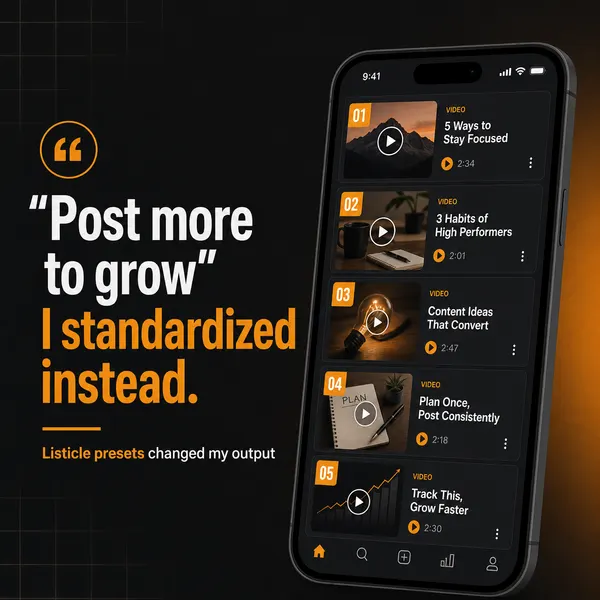
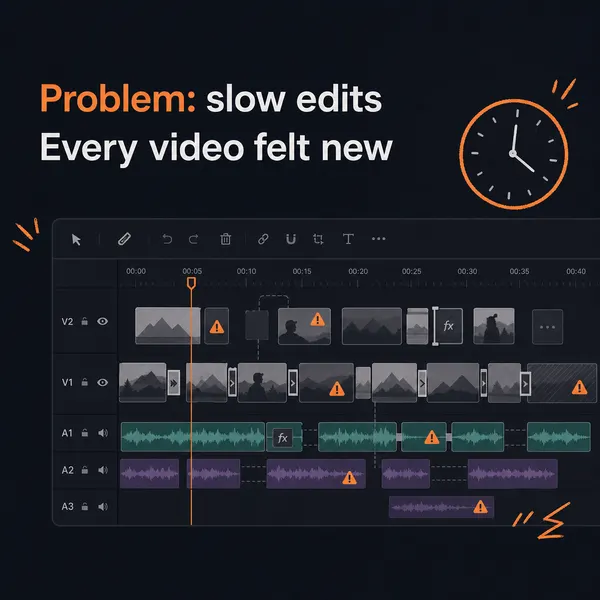
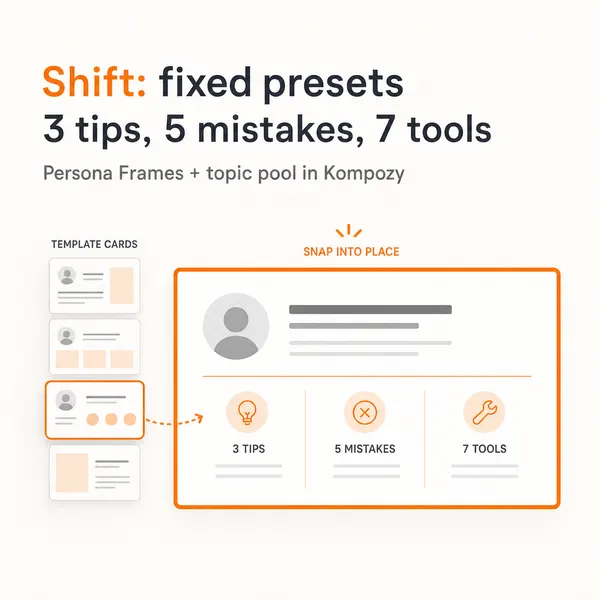
A real five-slide carousel generated in the Kompozy workspace, one of the social formats a newsroom story can be turned into before an editor approves it.


Who is this for, and who should skip it?
Best for:
- Marketing and comms teams with a real point of view on their category and a plan to publish weekly or daily
- Brands in under-covered industries that want to become the source people and answer engines cite
- Lean teams that need the newsroom structure without a full editorial staff
Not ideal for:
- Brands that cannot sustain a publishing cadence; a feed that goes quiet after a few weeks looks abandoned
- Companies whose plan is a few big set-piece campaigns a year, where the newsroom shape is wrong
- Teams without leadership buy-in for a fast approval lane, which real-time content depends on
Frequently asked questions
What is a brand newsroom?
A brand newsroom is a central, cross-functional team — editors, writers, designers, social and PR people — that produces and publishes timely, on-brand content the way a media outlet does: on an editorial calendar, to a daily or weekly rhythm, across many platforms. Instead of waiting on external journalists or slow campaign cycles, the brand reports directly to its own audience, filling gaps in industry coverage, controlling its narrative, and responding to cultural moments in near-real time. It is an operating model, not a room.
What roles does a brand newsroom need?
At minimum an editor-in-chief who owns strategy and standards, one or two managing editors who run day-to-day production, and the makers needed to finish content — writers, designers, video and social people. Larger newsrooms add a beat system that assigns people to cover specific parts of the business, plus an editorial board of senior stakeholders (marketing, PR, social, sales) for direction. A lean team can run the model with an editor-in-chief, a managing editor, and shared makers if the production and publishing are streamlined.
How is a brand newsroom different from a normal content calendar?
A content calendar schedules planned content; a newsroom is built to react. The difference is cadence and responsiveness. A newsroom runs on standups and short approval lanes so it can publish a timely piece the same day a story breaks, mixes reactive content with a planned evergreen base, and treats publishing as a continuous operation rather than a series of campaign pushes. A calendar is one tool inside a newsroom; it is not the newsroom.
What is the biggest reason brand newsrooms fail?
Output. The model was designed by and for organizations that could staff a full editorial team, and most brands that adopt it cannot sustain the volume by hand. The newsroom launches, ships strongly for a few weeks, then the cadence slips because a small team physically cannot write, design, produce, and publish enough on-brand content across enough platforms to stay present. The failure is almost never the idea — it is the production rate. Systematizing the output is what keeps a lean newsroom alive.
Do you need a big team to run a brand newsroom?
Not anymore, but you need to solve the output problem the traditional model assumed a big team would solve. The editorial judgment — what to cover, the angle, the standards, the final approval — still needs people and does not scale by adding software. What can scale is the production: turning one editorial decision into the many formats and platform-native posts a newsroom ships. A lean team that keeps the judgment human and automates the manufacturing can hold a cadence that used to require a full staff.
How do we know this?
This guide is an operating model drawn from how editorial teams are structured. On 2026-10-23 we checked its one historical example, the 2013 Super Bowl blackout post, against Digiday's oral history, and confirmed Kompozy's publishing details on kompozy.io.
Sources
- Digiday — The definitive oral history of the Oreo 'You can still dunk in the dark' Super Bowl tweet (read 2026-10-23)
- Kompozy — Pricing (read 2026-10-23)
Get started → · ← All guides · Compare Kompozy vs other tools