AI visibility across the major AI assistants (2026): where your effort pays off as ChatGPT, Gemini, and Claude pull ahead — and whether to stop tracking Perplexity
AI visibility is no longer one channel — it is a set of engines with very different sizes, and the mix moved hard in 2026. By app-usage tracking, ChatGPT slipped below half the market for the first time, even as web-visit trackers kept it in the low-to-mid 50s; Gemini roughly tripled its share on the back of a billion-plus-user app, and Claude was the fastest-growing major assistant of the year. Perplexity, meanwhile, shrank in the referral trackers, which set off a live argument among practitioners: Siege Media's Ross Hudgens said to remove Perplexity from LLM trackers entirely, while Greg Jarboe argued to de-weight it rather than drop it. That debate is really a proxy for the harder question every team now faces: with a fixed amount of measurement and content effort, which assistants deserve it, and how do you split it as the landscape keeps shifting? This guide gives the honest state of the assistant market by share (and why the trackers disagree), a framework for weighting engines by audience and behavior rather than raw size, the case for and against dropping Perplexity, and why the answer to "where does my visibility matter" is a moving target that punishes single-engine bets.
Published 2026-09-09 · Updated
Short answer
AI visibility now spans assistants of very different sizes. Sensor Tower put ChatGPT at 46.4% of AI assistant app share in May 2026, its first time under half, while Similarweb web visits still had it near 54%. Gemini rose to about 28% and Claude to about 9% to 10%. Perplexity is in the low single digits. Weight effort by where your audience is, track each engine separately, and keep Perplexity as a monitor.
Key takeaways
- Sensor Tower: ChatGPT's app share fell to 46.4% by the end of May 2026, down from above 50% in January.
- Similarweb, May 2026 web visits: ChatGPT 53.9%, Gemini 27.9%, Claude 9.2%, Perplexity 1.3%.
- A year earlier, Similarweb had ChatGPT near 76%, Gemini under 9%, and Claude around 2%.
- Trackers measure different things (web visits, referrals, app usage, users), so never compare them directly.
- Track each engine separately and re-check the weights every quarter.
What is the Perplexity tracking debate about?
In 2026 a small argument between practitioners went further than it looked. Ross Hudgens, CEO of Siege Media, wrote that everyone should remove Perplexity from their LLM trackers, on the grounds that its share had shrunk enough to distort where marketers thought their visibility mattered. Greg Jarboe, writing for Search Engine Journal, agreed Hudgens was asking the right question but pushed back on the answer, arguing you should de-weight Perplexity rather than delete it — the shrinking engine still carries useful competitive signal and pockets of vertical strength. The specifics of that back-and-forth matter less than what it exposes: AI visibility is no longer one channel you either win or lose. It is a portfolio of engines of wildly different sizes, and every team now has to decide, with finite effort, which ones are worth measuring and creating for.
This guide is about that allocation problem, not the measurement mechanics — for the metrics themselves (prompt sets, per-engine presence, attribution) the companion piece is AI visibility measurement in 2026, and the broader case for running AI search as a measurable growth channel sits alongside it. What follows is the state of the assistant market as of late 2026, why the share numbers disagree so violently, a framework for weighting engines instead of chasing the biggest one, the honest case on both sides of the Perplexity question, and why a single-engine bet is the riskiest position you can hold in a market this unstable.
How did AI assistant market share shift in 2026?
One headline event, by one measure, was ChatGPT slipping below 50% market share for the first time: Sensor Tower's app-usage tracking put it at 46.4% by the end of May 2026, down from over 50% in January. Web-visit trackers tell a less dramatic but directionally identical story — by web-visit share in mid-2026, Similarweb-style figures put ChatGPT at roughly 54% of assistant traffic, Gemini near 28%, and Claude around 9%, with DeepSeek, Grok, Perplexity, and Copilot filling the low single digits. Read against a year earlier, the movement is the story: ChatGPT fell from roughly three-quarters of the market toward half, Gemini climbed from single digits to around a quarter, and Claude rose from about 2% to close to 9%. Treat the precise percentages as directional — they differ by tracker — but the shape is consistent everywhere: the leader shrank, the second place tripled, and the third place was the fastest riser.
Scale underneath those percentages is enormous, which is why the shifts matter. OpenAI reported over a billion active users across its products in 2026, and Google's Gemini app crossed a billion monthly users the same year. Anthropic's Claude grew fastest of the majors and built a strong reputation in productivity, developer, and enterprise use — a different audience shape than a reach number alone conveys. The takeaway is not that ChatGPT stopped mattering; it is comfortably still the largest single engine. It is that a visibility strategy built in 2025 around one dominant assistant is now aimed at a market where a quarter of the attention moved to a different one.
Why do AI assistant market share numbers disagree?
Before weighting anything, you have to know that the market-share figures floating around measure different quantities, and comparing them directly produces nonsense. Four distinct measurements get quoted interchangeably. Web-visit share (the Similarweb style) counts sessions to the assistant's own website — the ~54/28/9 split above. Referral share (the StatCounter style) counts the clicks an assistant sends out to other sites, which is a completely different behavior and gives very different numbers. App-usage share (the Sensor Tower style) counts engagement within the AI-assistant app category specifically, which is what put ChatGPT below 50% for the first time in May 2026 even as its web-visit share stayed in the low-to-mid 50s. And monthly-active-user counts measure a company's whole product footprint, which is why a billion-user figure and a single-digit web-visit percentage can both be true for the same brand.
Perplexity is the cleanest example of why this matters. In the referral trackers its outbound share visibly declined across mid-2026 — StatCounter's figures showed it dropping from around 8% in June toward roughly 4% by August, while Gemini's referral share rose over the same window. That decline is real and is what fueled the "drop it" argument. But referral share measures how often an engine sends traffic away, not how many people use it, so a fall there does not by itself prove the engine is unused — it may reflect a product that increasingly answers in place. The discipline is simple and non-negotiable: every share figure travels with its methodology, and you never subtract a referral percentage from a web-visit percentage as though they describe the same thing. This is the same reason AI visibility is measured per engine, never blended — the aggregates hide more than they reveal.
How should you weight AI engines instead of chasing the biggest?
The instinct to pour everything into the largest engine is the wrong default, because global share is not your share. What you actually want is effort weighted by where your specific audience is and where your real prompts win or lose — and that starts with your own data, not a market-wide chart. Your self-reported attribution ("how did you hear about us?") and your per-engine presence for the prompts your customers actually type are the ground truth; the global figures are only a prior to fill in what your own data cannot yet tell you.
As a rough 2026 starting weight, before your own data overrides it: ChatGPT and Google's AI surfaces — Gemini plus AI Overviews and AI Mode — carry the most reach for general and consumer audiences, so they earn the heaviest weight for most brands. Claude over-indexes for technical, developer, and enterprise-productivity audiences, so a B2B software or dev-tools brand should weight it far above its 9% global share would suggest. Perplexity and Copilot are low-weight monitors for most teams, but rise sharply in weight if your niche is research-heavy, academic, or embedded in the Microsoft ecosystem. The point of the framework is that the correct allocation is a function of your audience, not the leaderboard — a developer-tools company that weighted purely by global share would systematically under-invest in the engine its buyers actually use.
The re-check discipline
Whatever weights you set, they decay. The single most important fact about the 2026 landscape is how fast it moved: the leader shed roughly a quarter of the market in a year while a competitor tripled. An allocation that is correct in Q1 can be materially wrong by Q3. So the framework is not a one-time setup; it is a quarterly review of three inputs — the global share trend, your own per-engine presence, and your attribution mix — with the weights adjusted when any of them shifts. Teams that set an engine split once and forget it are optimizing for a market that no longer exists.
Should you stop tracking Perplexity?
So should you drop Perplexity? Both sides of the argument are partly right, which is why it became a debate rather than a memo. The case for dropping it is that a shrinking, low-share engine sitting in a blended visibility score drags your attention toward customers who are mostly elsewhere; if a tool reports one averaged number and Perplexity is a tenth of it, that tenth can nudge decisions out of proportion to the audience it represents. The case against dropping it is that Perplexity retains genuine strength in research-oriented and citation-heavy queries, is used by a valuable if smaller cohort, and — as a competitive intelligence surface — tells you which sources win in a citation-first engine even if few of your buyers use it directly.
The resolution is the same one that dissolves most of these arguments: do not hold a single blended score in the first place. If your visibility is tracked per engine, Perplexity cannot distort anything, because it is its own line item that you can weight to near-zero for optimization while still watching it for signal. "Remove it" and "de-weight it" converge once you stop averaging — a de-weighted engine you still monitor is functionally what Hudgens wants (it drives no effort) and what Jarboe wants (you keep the signal) at the same time. Keep Perplexity as a low-weight monitor unless your niche makes it a target, and revisit that call on the same quarterly cadence as every other engine. The mechanics of doing well specifically on it, if it is a target for you, are in Perplexity citation optimization.
Why is betting on a single AI engine risky?
Everything above points at one conclusion: concentrating your visibility effort on any single assistant is the most exposed position available in 2026. There are two independent reasons. The first is cross-engine variance — the same prompt returns a different set of named brands on ChatGPT, Gemini, and Claude, because each retrieves, ranks, and cites sources differently, so being the answer on one engine is close to no evidence about the others. Winning ChatGPT and ignoring Gemini leaves you invisible to a quarter of the market that a year ago barely existed. The wider shift from ranking on links to being named by engines, and why coverage beats a single ranking, is the subject of AI visibility beyond SEO.
The second reason is the instability itself. A market where the leader can lose a quarter of its share in twelve months is a market where today's safe bet is tomorrow's stranded asset. The hedge against that is not predicting the next winner; it is coverage — publishing specific, genuinely useful, citable content to the surfaces every major engine reads, so that when the mix shifts again you are already present on whichever engine rose. That is a content-production and distribution problem, not a measurement one, and it is where most visibility programs stall: the measurement layer tells you which engines and prompts you are losing, and then someone still has to produce the answer and get it in front of all of them. How the underlying scoring rewards that coverage is unpacked in how AI search visibility metrics are calculated.
Where does Kompozy fit in multi-engine AI visibility?
The strategic conclusion — do not bet on one engine; build coverage across all of them — is a production and publishing problem, and that is the half Kompozy is built for. It is an AI content generation and multi-platform publishing engine, not a visibility tracker; it will not tell you your share of voice on Gemini or whether to drop Perplexity. Pair it with a measurement tool that owns the scoreboard. What Kompozy owns is the part that actually moves per-engine presence: turning one answer into enough specific, on-brand content, on enough surfaces, that you are present wherever the market happens to have moved.
Concretely, you take a real answer to a prompt you are losing — a founder's voice memo, a support doc, a rough draft — and Kompozy generates across its full range of output formats: a blog article that answers the prompt directly, text posts, images and carousels, and short-form or avatar video, all governed by a Persona Brief so every piece reads specifically like you rather than the generic copy models skim past. Because the engines each read different surfaces, the distribution half is where the coverage strategy actually lands: Autopilot schedules that content across up to 9 platforms, with per-post review available, putting your answer in front of the blog, social, and video surfaces every major assistant indexes rather than leaving it on one page one engine might crawl. That is the difference between a single-engine bet and a portfolio — the same content-repurposing motion, aimed at breadth of surface rather than one destination.
Two honest boundaries keep this credible. Kompozy does not measure visibility, so it is no substitute for the tracking layer that tells you which engines and prompts to aim at — the allocation framework in this guide runs on data a measurement tool gives you, not on anything Kompozy reports. And volume without specificity does not earn citations on any engine; the review gate exists precisely so a person keeps each piece genuinely useful and accurate rather than shipping filler that all the assistants now demote. Used that way — measurement to aim, Kompozy to produce and distribute the coverage — a visibility program stops being hostage to which assistant is winning this quarter, because it is present on all of them by the time the mix moves again.
What does this look like in Kompozy?
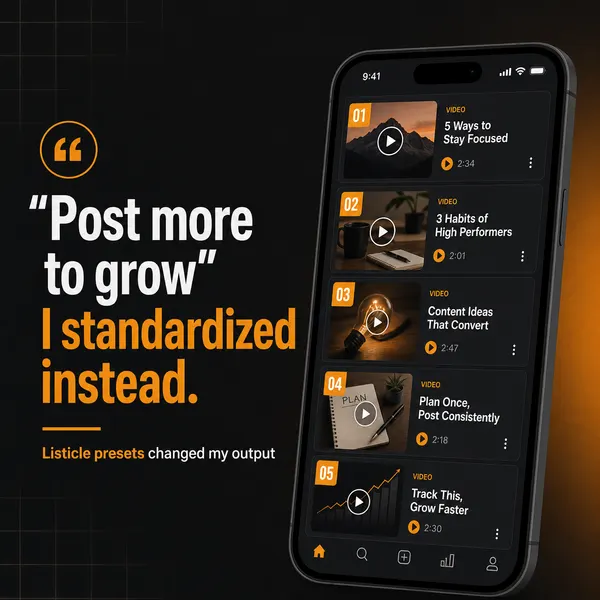
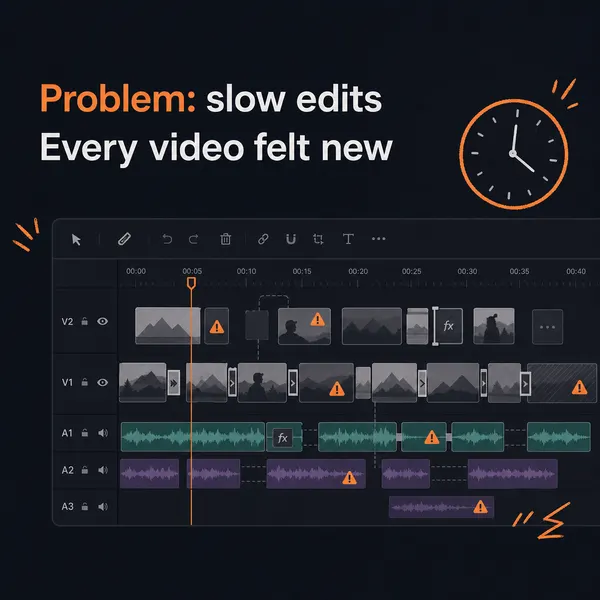
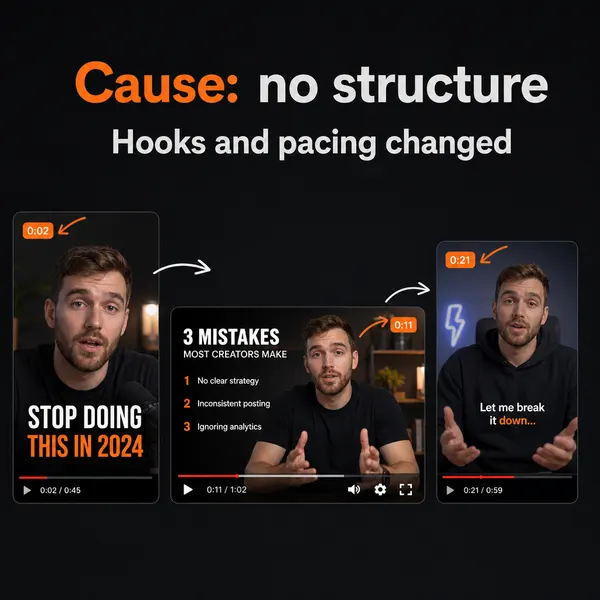
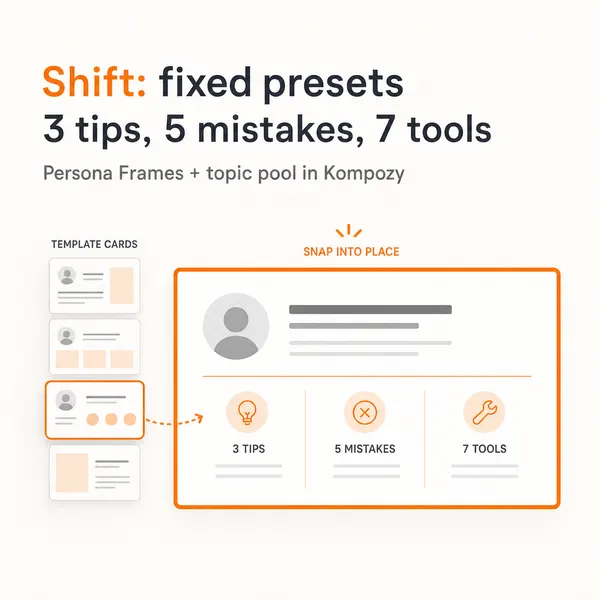
A real five-slide carousel made in the Kompozy workspace. It is one of the formats that can carry the same answer to the social, blog, and video surfaces that different assistants read.
Who is this for, and who should skip it?
Best for:
- Teams deciding how to split AI visibility effort across ChatGPT, Gemini, Claude, and others
- B2B and developer brands whose buyers may over-index on Claude
- Programs that need content on many surfaces so they are present wherever the mix shifts
Not ideal for:
- Anyone looking for a visibility tracker; Kompozy does not measure share of voice
- Teams wanting one blended AI visibility score, which this guide argues against
- Brands betting everything on whichever engine is largest this quarter
Frequently asked questions
Which AI assistants lead AI visibility in 2026?
By web-visit share through mid-2026, ChatGPT still leads (roughly 54% of assistant traffic in Similarweb's figures), Gemini sits second at around a quarter after roughly tripling year over year, and Claude is a distant but fast-growing third near 9%. The exact numbers vary by tracker and methodology — Sensor Tower's app-usage tracking put ChatGPT below 50% for the first time in May 2026, while web-visit trackers kept it in the low-to-mid 50s over the same stretch — but the direction is consistent across sources: Gemini surged on the back of a billion-plus-user app, and Claude was the fastest-growing major assistant. Perplexity, Copilot, DeepSeek, and Grok each sit in the low single digits.
Should I stop tracking Perplexity for AI visibility?
There are two credible positions. Siege Media's Ross Hudgens argued that everyone should remove Perplexity from their LLM trackers, because its shrinking share can distort a blended visibility score and misdirect effort toward an engine few of your customers use. Greg Jarboe countered that the right move is to de-weight rather than delete — Perplexity still has vertical and research-heavy pockets of strength, and dropping it entirely erases a useful competitive signal. The practical answer: never blend engines into one score, weight each by where your actual audience is, and keep Perplexity as a low-weight monitor rather than a target.
Why do AI assistant market-share numbers disagree so much?
Because trackers measure different things. Similarweb-style web-visit share counts sessions to the assistant's own site; StatCounter-style referral share counts clicks the assistant sends out to other sites; Sensor Tower-style app-usage share counts engagement within the AI-assistant app category specifically; and monthly-active-user counts measure reach across a company's whole product line, not visits to one chat surface. An engine can be huge by users, mid-sized by web visits, and tiny by outbound referrals all at once — which is exactly Perplexity's situation, and it is also why Sensor Tower could report ChatGPT below 50% in May 2026 while Similarweb's web-visit share kept it in the low-to-mid 50s over the same stretch — the two are measuring different behavior, not disagreeing about the same one. Read every share figure with its methodology attached, and never compare a referral percentage against a web-visit percentage as if they mean the same thing.
How should I split AI visibility effort across engines?
Weight by where your audience actually is, not by raw global share. Start from your own attribution and prompt data: which engines your customers say they used, and where you appear or lose for your real prompts. As a rough default in 2026, ChatGPT and Google's AI surfaces (Gemini plus AI Overviews and AI Mode) carry the most reach for most B2C and general audiences, Claude over-indexes for technical, developer, and enterprise-productivity audiences, and Perplexity and Copilot are low-weight monitors unless your niche is research- or Microsoft-heavy. Then re-check quarterly — the mix has moved fast enough that a static allocation goes stale within a quarter or two.
Is optimizing for one AI assistant enough?
No, and it is the most expensive mistake available right now. The same prompt returns different brands on ChatGPT, Gemini, and Claude because each retrieves and cites sources differently, so being the answer on one engine tells you almost nothing about the others. Worse, the market itself is unstable — the leader lost a quarter of its share in a year while a rival tripled — so a bet concentrated on today's biggest engine is exposed to next year's reshuffle. The durable strategy is coverage: publish specific, citable content to the surfaces every major engine reads, and measure presence per engine rather than in aggregate.
How do we know this?
We checked the Sensor Tower, Similarweb, and StatCounter share figures, the user counts, and the Hudgens and Jarboe positions against the sources listed below on 2026-10-23, and removed or reworded any figure we could not confirm. Kompozy plan, format, and platform details come from kompozy.io/pricing and the Kompozy glossary.
Sources
- TechCrunch — ChatGPT's market share slips below 50% for the first time (read 2026-10-23)
- Search Engine Journal — ChatGPT, Gemini, and Claude lead AI visibility: is it time to stop tracking Perplexity? (read 2026-10-23)
- Similarweb — AI search stats 2026 (read 2026-10-23)
- Similarweb — ChatGPT vs Gemini vs Claude vs Perplexity (read 2026-10-23)
- StatCounter — AI chatbot market share (read 2026-10-23)
- Kompozy — Pricing (read 2026-10-23)
- Kompozy — Autopilot (glossary) (read 2026-10-23)
Get started → · ← All guides · Compare Kompozy vs other tools