How to use AI agents to run and scale an influencer marketing campaign (2026)
Use AI agents to run an influencer campaign: pick the right agent, automate creator discovery and outreach, keep a human gate on deals, and produce the content.
Last verified · 2026-10-23 · by Moe Ameen
Published 2026-09-10 · Updated
Short answer
To use AI agents for influencer marketing, write a one-sentence objective with audience, platform and creator tier, pick an agent that covers the stages you need, and let it run discovery and outreach. Vet the shortlist yourself, cap rates and require your sign-off on contracts and payments, then produce the owned content yourself. Influencer Marketing Hub's 2026 benchmark found creator discovery is the top AI use case, at 36.67%.
Key takeaways
- Creator discovery leads AI adoption in influencer marketing at 36.67%.
- Treat the agent's discovery output as a first pass, not a shortlist.
- Automate outreach, but take over the thread when a creator replies.
- Keep rates, usage rights and payment release behind a human approval.
- Sourcing agents don't make your owned campaign content.
Running an influencer campaign by hand is a coordination job that eats a week per drop: sourcing creators, vetting each one, writing outreach, chasing replies, negotiating rates, drafting briefs, tracking whether the post went live, and reconciling payment. AI agents are built to take the repetitive spine of that off your plate.
Unlike a discovery filter that returns a list, an agent chains steps toward a goal — you set an objective and it runs discovery, drafts outreach, and moves a shortlist forward without a fresh prompt at each hop. In Influencer Marketing Hub's 2026 benchmark, creator discovery is already the single biggest AI use case in the category, so this is a mainstream workflow, not an experiment.
This is the practical, do-it-today version. It walks the campaign lifecycle in order, shows exactly where to let an agent run and where to keep your hands on the wheel, and is honest about the one thing these agents do not do — make the branded content the campaign exists to distribute. The goal is a repeatable loop where the agent handles the operational load, you make the judgment calls that carry money and brand risk, and the content the campaign runs on is produced fast enough to keep up. Pair it with converting influencer traffic into ecommerce orders for the downstream half of the funnel.
How do you use AI agents to run an influencer campaign, step by step?
- Write the objective and ICP before you touch a tool. An agent is only as good as the goal you hand it, so define the campaign in one specific sentence — the outcome, the audience, the platform, and the creator tier. 'Book ten mid-tier skincare creators, US female 25-40, on TikTok and Instagram, for a spring launch' gives an agent something to run against; 'find some beauty influencers' does not. Write down your non-negotiables too — banned topics, minimum engagement rate, budget ceiling — because those become the guardrails you set later.
- Pick the agent by the stages you actually need automated. The agents on the market cover different slices of the lifecycle, so match the tool to your gap, not the marketing. If discovery is your bottleneck, a discovery-strong agent is enough; if you want the whole operational spine, choose one that spans outreach, contracting, and payment. Judge each by which stages it truly owns versus merely touches, and confirm it works on the platforms in your objective before you commit budget.
- Run discovery — but treat the output as a first pass, not a shortlist. Hand the agent your brief and let it scan the creator index, score audience fit, and flag follower fraud and engagement anomalies. This is the stage AI does best, because it is a search-and-filter problem and a wrong first pass costs almost nothing. Let it return a broad list of candidates rather than pre-deciding — the agent's job here is to compress hours of manual sourcing into minutes, not to make the final pick.
- Vet the shortlist yourself for authenticity and fit. This is the first judgment gate, and it stays human. Open the top candidates and actually watch their content: does the audience match, do the comments read like real engagement, does the creator's voice fit your brand without a stretch. Authenticity is the whole value of the channel, so an agent optimizing for reach can hand you a technically-qualified creator whose partnership will read as hollow. Cut anyone you would be embarrassed to be associated with, regardless of their metrics.
- Automate outreach, but keep the voice human. Let the agent draft personalized outreach per creator, send it, and run follow-up sequences so nothing sits unanswered — this is reliable and saves real time. Review the template before it goes out and set the agent to hand a thread back to you the moment a creator replies with a real question. Personalization at scale reads as personal only until a creator has seen the same template a few times, so your job is to step into live conversations, not to write the first touch.
- Set explicit guardrails on negotiation, contracting, and payment. If your agent offers negotiation, contract generation, or escrowed payments, use them, but bound them: set a rate ceiling, require your sign-off on any usage-rights or exclusivity clause, and keep a human approval on payment release. These are the decisions with real downside if the agent gets them wrong, so automate the paperwork and the tracking, not the final yes.
- Draft the brief with the agent, own the message yourself. Have the agent turn your objective into a first-draft brief — deliverables, timelines, dos and don'ts, disclosure requirements — then rewrite the part that carries the strategy. The agent is good at the logistics and the checklist; the actual thing you want each creator to communicate is a judgment call. Make disclosure non-negotiable in every brief, because a missing #ad is your legal exposure, not the creator's alone.
- Produce the branded content the campaign runs on. Here is the stage the sourcing agents leave open: none of them makes the content. Beyond the creator's own posts, a campaign needs your owned assets — announcement carousels and images, text posts across your channels, a recap blog and a newsletter to your list, and short clips cut from the creator's long-form video (with permission) for your feeds. Plan this as its own workstream from day one so production does not become the bottleneck the agent just removed from sourcing.
- Track deliverables, release payment, and measure the loop. Let the agent verify that posts went live on schedule, trigger payment on confirmed delivery, and pull performance data — reach, engagement, clicks, and where possible attributed orders. Then read the result yourself and decide who to re-book. The point of automating measurement is that the next campaign starts from evidence about which creators actually drove outcomes, not from instinct or vanity metrics.
What goes wrong when AI agents run influencer marketing?
- An agent optimizes for whatever you tell it to. Point it purely at reach or follower count and it will hand you creators whose partnership reads as hollow — authenticity is the value of the channel, so keep a human judging fit.
- Discovery output is a first pass, not a shortlist. The agent compresses hours of sourcing into minutes; it does not know your brand's taste. Watch the top candidates' content before anyone gets an offer.
- Do not let an agent send binding decisions unsupervised. Rates, usage rights, exclusivity windows, and payment release carry real downside — automate the paperwork and tracking, keep the final yes human.
- Personalized outreach at scale stops reading as personal fast. Set the agent to hand you the thread the moment a creator replies with a real question, or the relationship starts on an automated note.
- Disclosure is your exposure too. Bake #ad and platform disclosure requirements into every brief — a missing label is a legal and trust problem, not just the creator's oversight.
- The sourcing agent will not make your content. The creator's posts are one slice; your owned announcement, blog, newsletter, and clip assets still have to be produced somewhere, or the campaign launches half-built.
- Treat AI-generated or virtual creators honestly. If you run a synthetic persona, disclose it — an undisclosed AI influencer is exactly the manipulation audiences and regulators are now watching for.
Two compliance angles ride on this workflow. First, influencer disclosure: the creator's sponsored posts must carry clear #ad or platform disclosure, and the brand shares responsibility for it — put the requirement in every brief and confirm it went live. Second, if you use an AI-generated or virtual creator, disclose that it is synthetic; several platforms now require labeling realistic AI personas, and undisclosed synthetic endorsement risks both platform penalties and deceptive-advertising exposure. When an agent negotiates contracts on your behalf, keep a human review on usage-rights, exclusivity, and payment terms before anything is signed.
Where does Kompozy fit next to an influencer marketing agent?
The step an influencer agent hands back to you is the one it can't do: making the content. That is precisely where Kompozy plugs in — it is an AI content generation and multi-platform publishing engine, so the hours the agent just freed from sourcing go into production it runs for you instead of the other way around. Once your discovery agent delivers a roster and you have the creator's approved video, drop it into Kompozy and turn one campaign into a week of owned content: Clipped Shorts cut from the long-form video for your own feeds, announcement Carousel Posts and Photo Posts, Text Posts seeding the partnership across your channels, and a recap Blog Article plus an Email Newsletter carrying the drop to your list — all held to one Persona Brief so every asset sounds like your brand, then scheduled across up to nine social platforms plus blog and email by Autopilot behind a per-post review gate. The second use is the one that pays off between paid campaigns: Kompozy's AI Influencer persona pool and Persona Shorts let you stand up an owned virtual creator — a consistent, on-brand identity that never needs discovery, signs no contract, and keeps a branded creator presence posting on a cadence no roster could match. So the division of labor is clean: the agent sources and coordinates the human creators, and Kompozy produces the campaign's owned content and runs your always-on persona channel. Starter ($199/mo for 5,500 credits) fits a solo marketer or founder turning each drop into a content week; Pro ($499/mo for 18,000 credits) suits a brand running back-to-back campaigns plus an always-on owned channel; Enterprise is available through Contact Sales for agencies producing campaign content across many clients.
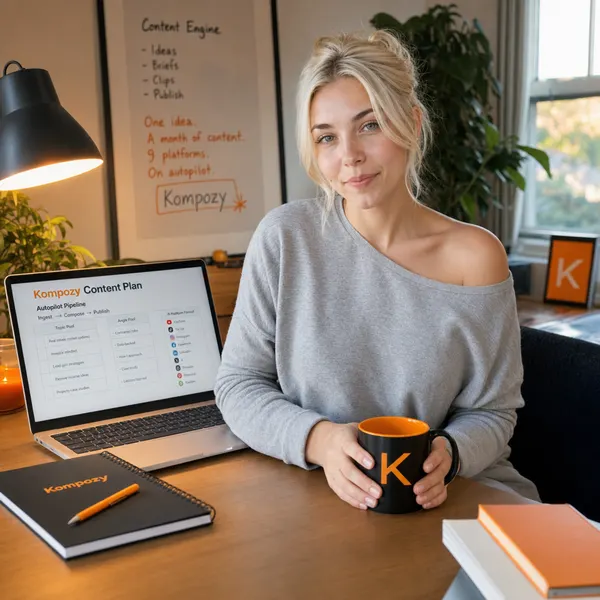
What does this look like in Kompozy?
A real persona photo post generated in the Kompozy workspace, shown as an example of the format. It was not made for this guide or for any customer.
Who is this for, and who should skip it?
Best for:
- Brands that spend too much time sourcing and chasing creators.
- Teams running repeat campaigns that can feed results into the next brief.
- Marketers who will keep a human on contracts and payment.
Not ideal for:
- Anyone who wants an agent to sign deals unsupervised.
- One-off campaigns with two or three creators you already know.
- Teams expecting the agent to produce branded content.
Frequently asked questions
Can an AI agent run an entire influencer campaign on its own?
Not safely. Agents are strong at discovery, outreach, coordination, and increasingly at contracting and payment inside guardrails you set. But the calls that carry brand and legal risk — which creator truly fits, whether a rate is fair, whether a post is on-brand and properly disclosed — are where unsupervised agents fail, and a bad influencer post is public. The working model is high automation on the operational spine with a human approving anything binding or customer-facing.
What part of influencer marketing do AI agents automate best?
Creator discovery and vetting, by a wide margin. It is a search-and-filter problem AI is genuinely good at, and it is the stage where the manual workload was heaviest — scanning indexes, scoring audience fit, flagging follower fraud. Influencer Marketing Hub's 2026 benchmark puts discovery as the top AI use case at 36.67%. Outreach and follow-up automate well too. Negotiation, contracting, and payment are shipping but still want a human on the binding parts.
What do AI agents for influencer marketing NOT do?
They do not make the content the campaign runs on. Every sourcing agent gets you to the creator and, at best, through the contract — but the branded video, the announcement carousel, the recap blog, the newsletter, and the short clips for your own channels still have to be produced separately. Production is the expensive, judgment-heavy work these agents leave untouched, so plan it as its own workstream from the start.
How do I keep an AI agent from picking low-quality creators?
Give it precise guardrails and keep the final pick human. Set a minimum engagement rate, banned topics, and audience criteria in the objective, then treat whatever the agent returns as a first pass to review rather than a shortlist to book. Watch the top candidates' actual content and comments before any offer goes out. The agent compresses sourcing; your taste still decides who represents the brand.
Do I still need a content tool if I use an influencer marketing agent?
Yes, because the two solve different halves of the channel. A sourcing agent handles finding, hiring, and coordinating creators; it does not produce your owned campaign assets or run a branded presence between drops. You need a content generation and publishing engine for the announcement posts, the recap blog, the newsletter, the repurposed clips, and — if you want one — an owned AI-influencer channel that never needs discovery or a contract.
How do we know this?
On 2026-10-23 we checked the AI adoption figures against Influencer Marketing Hub's 2026 benchmark report. Vendor capability claims we could not confirm were reworded as conditions. Kompozy plan details come from kompozy.io/pricing. Figures we could not confirm were removed or reworded.
Sources
- Influencer Marketing Hub: Influencer Marketing Benchmark Report (read 2026-10-23)
- Kompozy: Pricing (read 2026-10-23)